
History, or the study of the past, is everywhere. Every event, person or thing that we know about has a past, and its story can (often) be told using historical methodologies. Like everything else, the discipline of History itself has a history and even though it is a fairly new thing, it has very deep roots that are worth knowing about.
Since there is so much history to go through, this sort of exploration is bound to be very selective, and we’d hazard a guess that no two historians would choose the same milestones, so here is one possible version of the history of history (other narratives are available).
If you went back in time, let’s say to the thirteenth century, you would struggle to find history departments at a university. These start to appear surprisingly late – not until the nineteenth century. But history is by no means a new affair. People have probably been telling stories about the past pretty much since language became sophisticated enough to accommodate this. Some would argue that this is one of the main things we do as humans. But as these stories are all but lost to us now, we should focus here on how history became a discipline in the West. Discipline (from Latin discere, to learn) is a field of knowledge with its own rules and methodologies. And since we have to start somewhere it might as well be Ancient Greece (apologies to the Egyptians and Mesopotamians).
Origins
The word history is borrowed from the Ancient Greek ἱστορία (historia) meaning inquiry, and the person often considered the first historian is Herodotus of Halicarnassus (5th century BC). Herodotus wrote a detailed account called Histories of the wars between Greeks and Persians, in which he included many other stories, some of which were mythical or fantastical while others much more plausible.
The work itself is hugely complex and worthy of a discussion that can’t be accommodated here, but possibly its greatest contribution to the discipline of history is in offering a systematic account of events which examines cause and effect. This is the very basis of our practice as historians (and what separates us from antiquarians who are happy to focus more on the ‘what’ rather than the ‘why’).
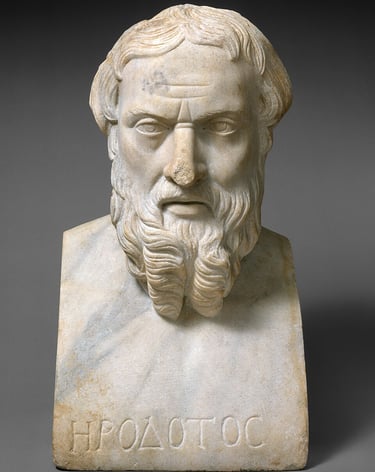
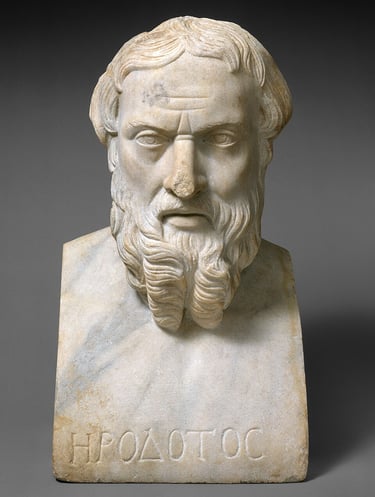
Herodotus (Roman copy from 2nd century AD of an earlier Greek statue).
The tradition of Greek historiography was carried on and further developed in subsequent centuries by Greeks and Romans such as Thucydides (5th century BC) and Livy (1st century BC – 1st century AD) who wrote a very comprehensive history of Rome. It is worth giving some attention also to Tacitus (1st century AD), a Roman historian who, in the beginning of his Annales, famously promised to tell the story ‘sine ira et studio’, that is, without anger or favour – a phrase closely related to the more common ‘without fear and favour’ which evokes impartiality. While most would agree that this promise was never kept, it introduces to our narrative the concept of striving for objectivity and accuracy which is so often on the historian’s mind.
The age of chronicles
People kept writing histories throughout antiquity as it shifted into what we now call the Middle Ages. And while we do see some grand narratives – for example Bede’s Ecclesiastical History of the English People – that try to make sense of events being written (often through a religious or moralistic lens), there was another emerging genre that became far more popular – the chronicle.
A chronicle records events which are ordered chronologically and tend to be somewhat eclectic at times. Depending on who was writing and for whom, subjects could include political events, wars, plagues, deaths of notable people, extreme weather events, diplomatic affairs, and so on. Throughout the Middle Ages this genre of historical writing became increasingly sophisticated, and today medievalists heavily rely on these sources to give (relatively) reliable accounts, and they also attract some scholarly attention as textual forms in their own right.
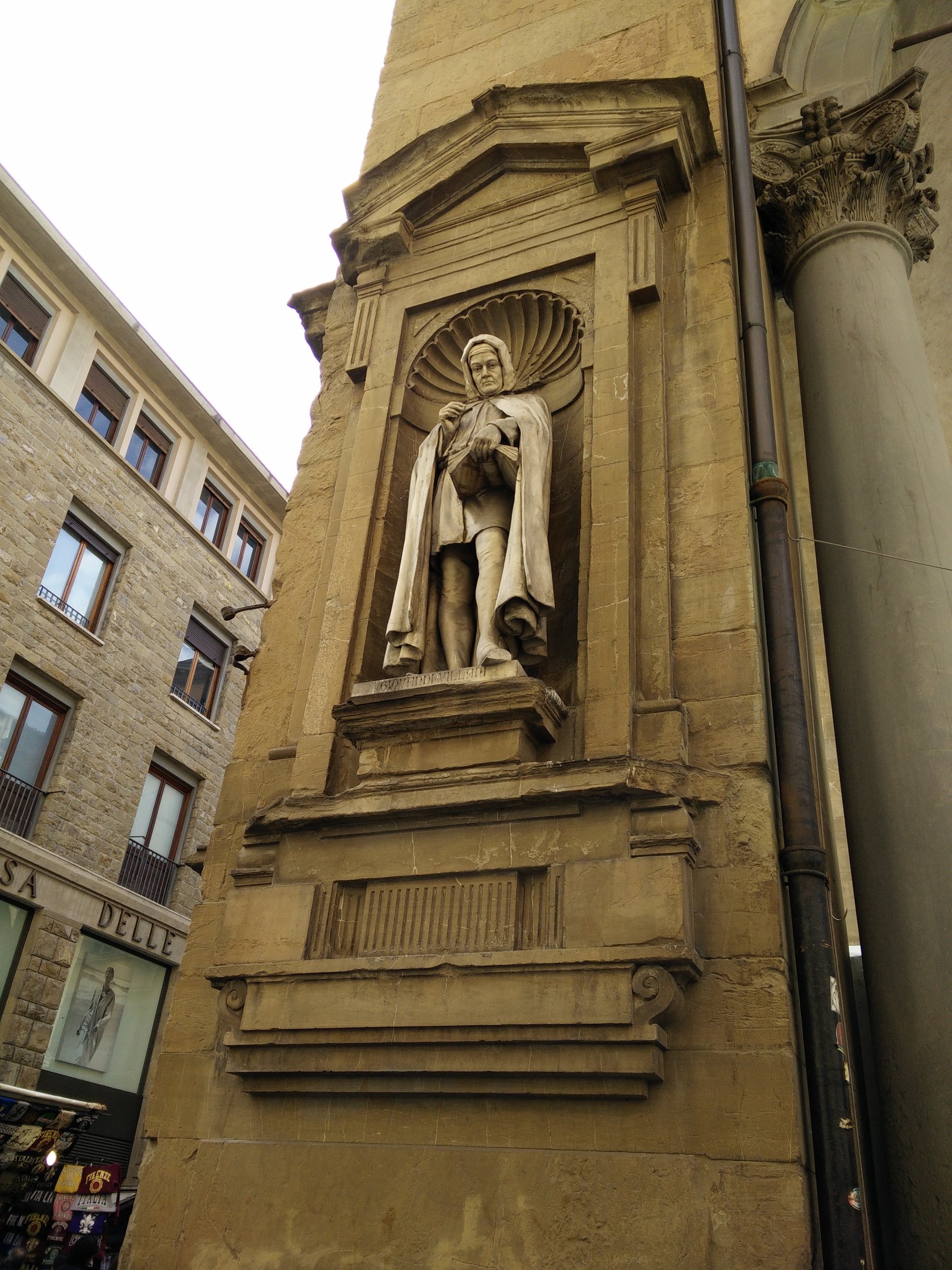
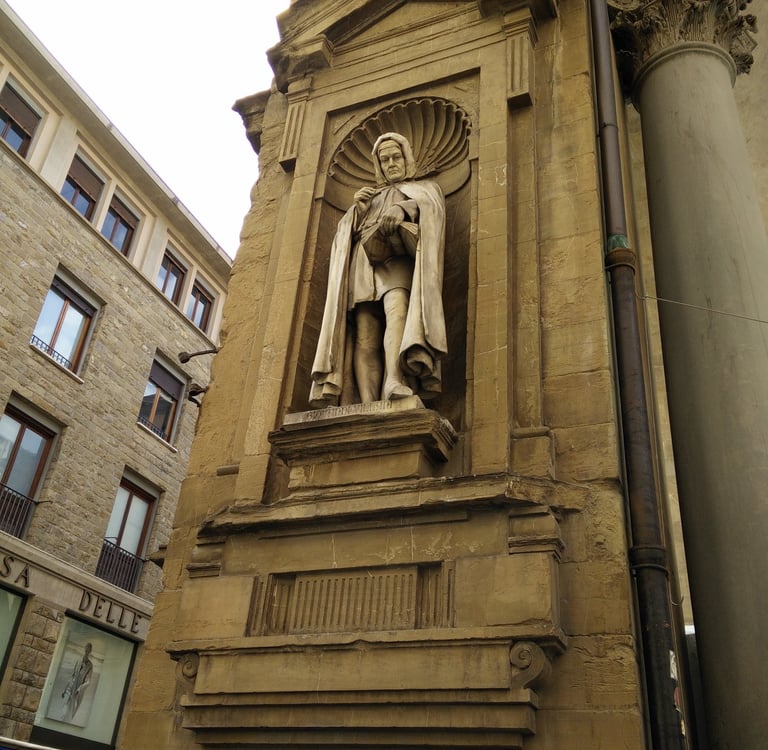
Statue of renowned fourteenth-century chronicler Giovanni Villani in Florence.
The (re)birth of a discipline
As the medieval world slowly gave way to modernity during what we now call the Renaissance, the role of history became more prominent. During the Middle Ages, the educational bedrock of university students was a group of disciplines called the Seven Liberal Arts (grammar, rhetoric, logic, arithmetic, geometry, astronomy, and music). The absence of history from this list is glaring, but the cultural movement known as humanism which came to prominence in the 15th and 16th centuries put things to right.
As the cultural mission of the humanists was to revive the world of Graeco-Roman antiquity, it was quite important to them to focus on the history of these civilisations. Humanists therefore revised the curriculum and created another set of disciplines which they called Studia humanitatis which consisted of five disciplines: grammar, rhetoric, poetry, history, and moral philosophy. For the first time in a long while students could focus exclusively on history for its own sake, not as part of their studies in grammar or literature (e.g., by reading Caesar’s account of the Gallic War to learn how to write well in Latin).
History was important to humanists because they believed that you could learn practical lessons from it. A notable example of this was Niccolò Machiavelli who frequently used historical examples to make a point about his own time. Humanists thus started writing histories that departed from the medieval focus on moral and religious reasoning in favour of what we might call more realistic and secular interpretations.
The nineteenth century
The next major milestone in our journey is the nineteenth century, when history became an independent academic discipline in universities with an emphasis on empiricism and reliance on critical analysis of primary sources and archival materials. This not only feels more modern, but recognisable in a contemporary way. The main proponent of this approach was a German historian called Leopold von Ranke who is still famous among historians today for his imperative to tell history ‘as it really happened’ (wie es eigentlich gewesen). This was a very confident approach to history which asserted that if one read the right texts, one could know the Truth about the past.
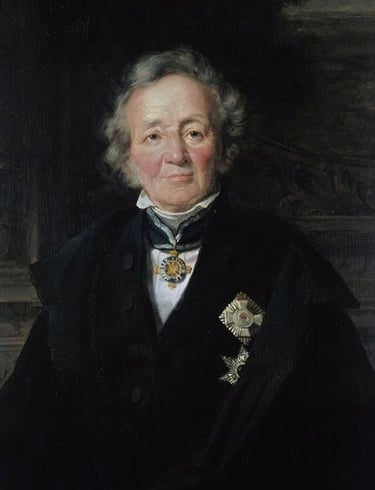
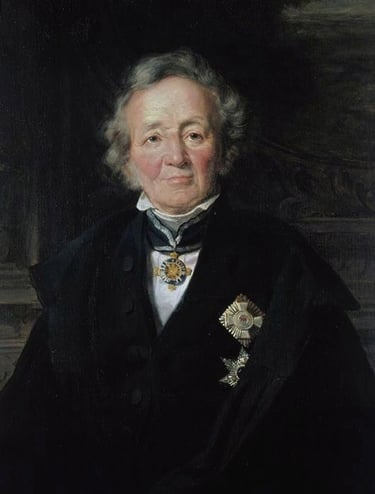
Leopold von Ranke in 1875