
Hearing the word Renaissance may invoke the image of great palaces, bold thinkers, and ninja turtles creating wondrous art. The Middle Ages, on the other hand, conjure up visions of a dull and barbarous time, unrefined and superstitious. These images are largely wrong, but where did they come from, and should we do away with them?
Conceptually, these two contrasting periods cannot exist without one another because the people of the Renaissance invented the Middle Ages in order to tell a story about what they themselves were not (i.e., backward and uncultured). In fact, the two periods were very similar in many respects, and there was no single event that ended the Middle Ages and kicked off the Renaissance. Instead, over a couple of centuries we find a lot of continuity and a slow and non-linear transition into what we might call Modernity.
The cartoonish portrayal of a miserable time of darkness and a restoration of the glorious Graeco-Roman past still informs how we divide history into more manageable chunks (aka periodisation), and while flawed, it has endured for about half a millennium. But who is to blame?
Inventing the past
Renaissance, which is French for ‘rebirth’, is the name given to the period that comes between the Middle Ages and the modern period. One of the first to talk of rinascita (still ‘rebirth’ but in Italian) was Giorgio Vasari, a 16th-century artist and art historian from Arezzo who wrote biographies of the most revered artists of his time. He was one of the first to divide his historical account – probably on the influence of the scholars from the Florentine Accademia – into three parts: Antiquity, the Middle Ages, and his own time, or Modernity. This division was based on the opinion that after the fall of Rome, culture had stagnated and descended into barbarism, only to be revived by the artists and scholars of the Renaissance.
Tripartite periodisations weren’t themselves new. Medieval scholars were used to thinking about world history as made out of three ages, for example: ante legem, sub lege, and sub gratia, that is, before the law, under the law, and under mercy (the law being that of the Old Testament, and the mercy is that of Christ dying for our sins).
What was novel about Vasari’s understanding of history was that it shifted the focus from the religious and moralistic to the cultural. According to this narrative the Ancients had refined art, architecture and literature, they were then subsumed by invading barbarians who brought about a thousand years of darkness with virtually no worthwhile poetry whatsoever, and finally the culture of the Ancients was rediscovered and revived in the Renaissance.
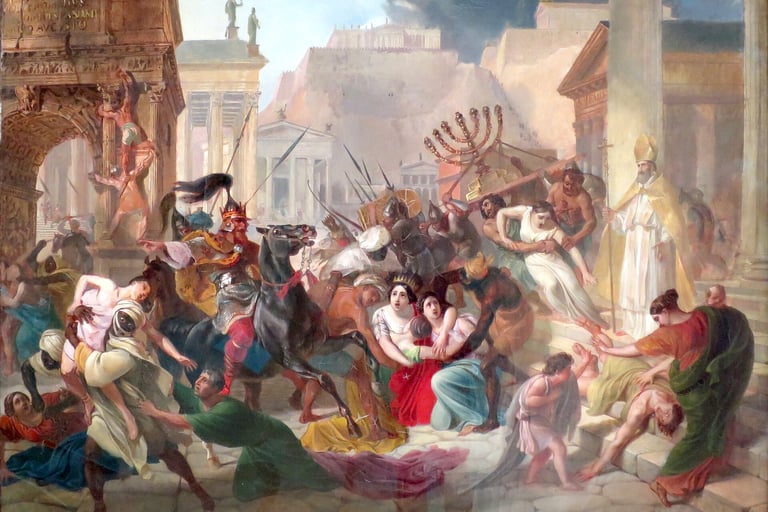
The Sacking of Rome by the Vandals in 455 (Karl Bryullov, 1835-6).
Petrarch and his dark age
The seed of this story told by Vasari was possibly sown some 200 years earlier by another Arezzo-born Florentine luminary, Francesco Petrarca (1304–1374, known in the English-speaking world as Petrarch). Petrarch was a renowned poet and a cultural giant of the fourteenth century who alongside Dante and Giovanni Boccaccio is considered one of the ‘three crowns’ (or tre corone) of Florence.
Petrarch had a very negative opinion on his own time, and indeed all the time since the fall of Rome. He thought of it as dark and barbaric and longed for the glorious past. This past, he believed, could be revived through exactly the sort of cultural projects that he was promoting as an early humanist.
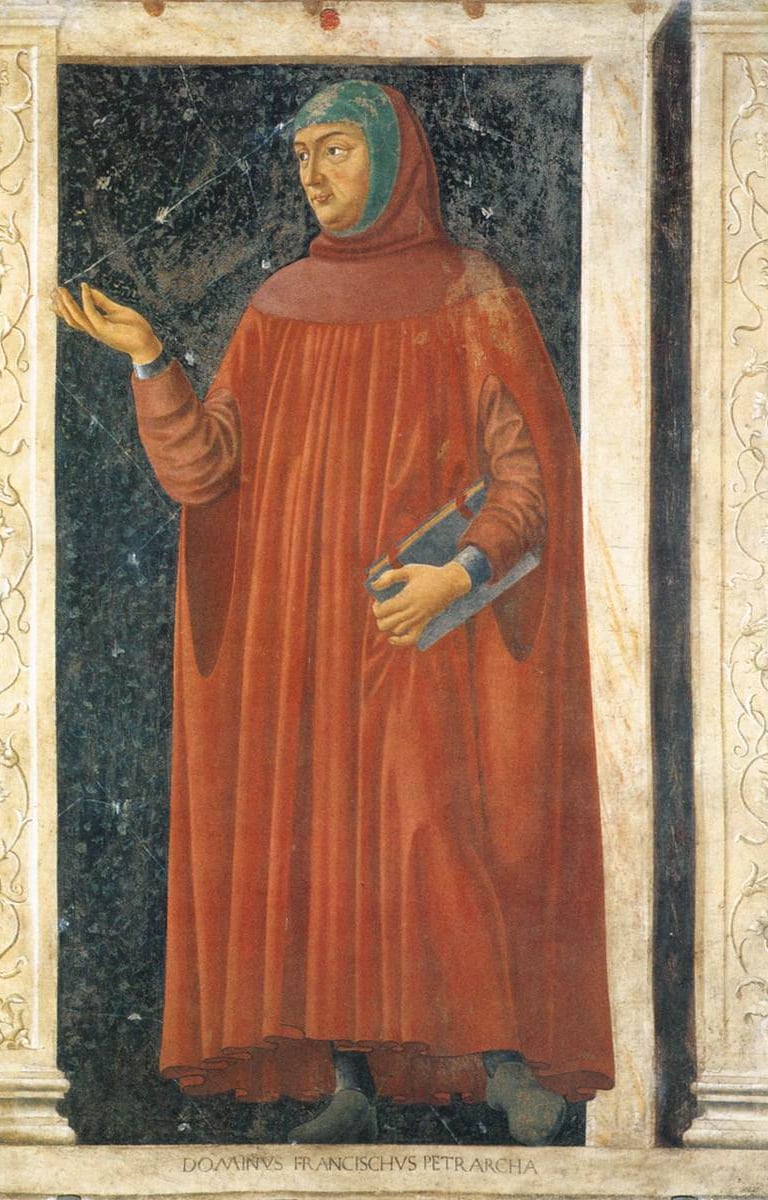
Francesco Petrarca (1304-1374).
Humanism was the cultural movement that powered much of what we now consider the Renaissance (we wrote about it here). It promoted the study and interest in Graeco-Roman art, languages, poetry, and history. It involved a lot of digging up forgotten ancient texts in old monastic libraries, Ciceronesque rhetoric about liberty and the virtues, realism in painting and sculpture, and Ionic, Doric and Corinthian columns in architecture. All in pursuit of reviving antiquity. Petrarch said it best in his 1370 Invectiva contra cuiusdam anonimi Galli calumnia: ‘What is all of history other than the praise of Rome?’ (Quid est enim aliud omnis historia quam Romana laus).
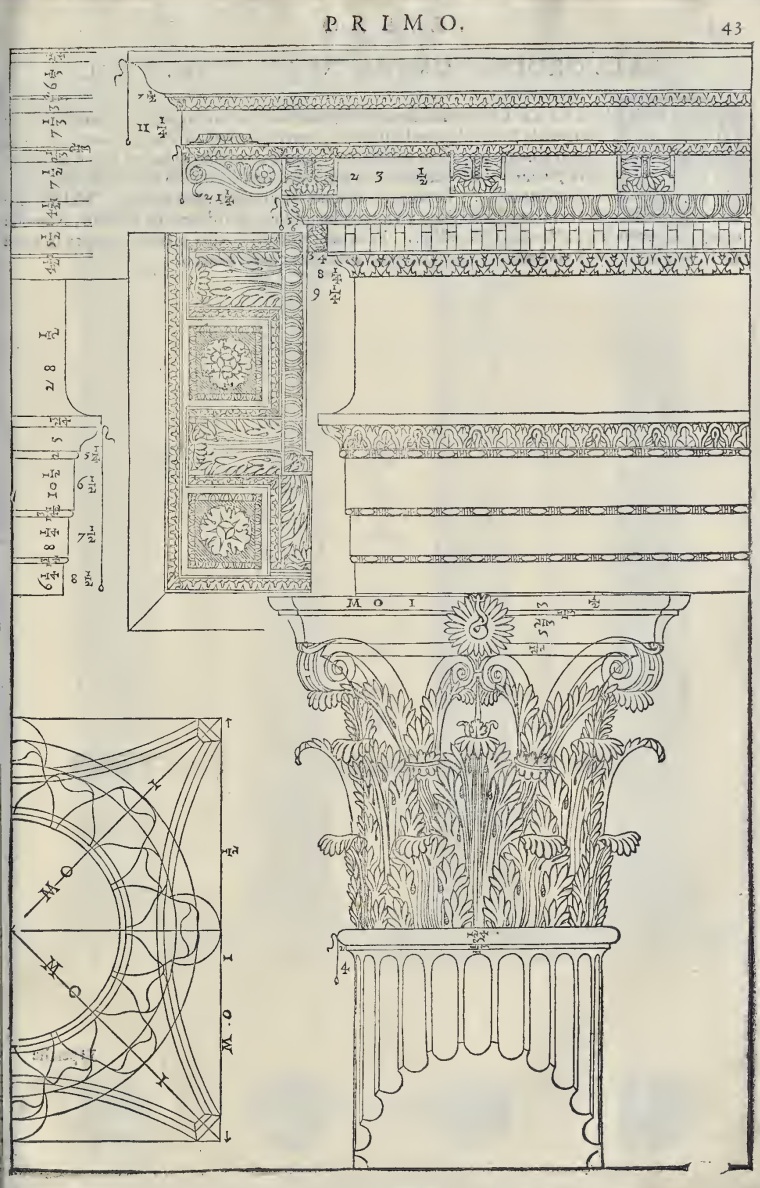
The Corinthian order as described in Andrea Palladio’s Four Books on Architecture (1581).
The legacy of renaissance humanism
The humanistic project was quite successful overall in shaping both cultural tastes and educational programmes, cementing the importance of Antiquity in the minds of Europeans and with it a disdain to most things medieval (even though people of the Middle Ages were just as concerned with Antiquity and even had their own ‘Renaissance’ in the twelfth century).
Proof of the Renaissance’s legacy can be seen everywhere even today. If you live in ‘the West’, go out and look at the nearest government building and it will likely be modelled after a Roman temple. It is very likely that the Greek city states or the Roman Empire made an appearance on your school curriculum (maybe someone was even unkind enough to try and teach you Latin). Perhaps you read a popular book on Greek mythology. And if you live in a republic (or more generally a democracy) you probably heard a politician harkening back to the Graeco-Roman past as the bedrock of our sacred freedoms or something of the sort.
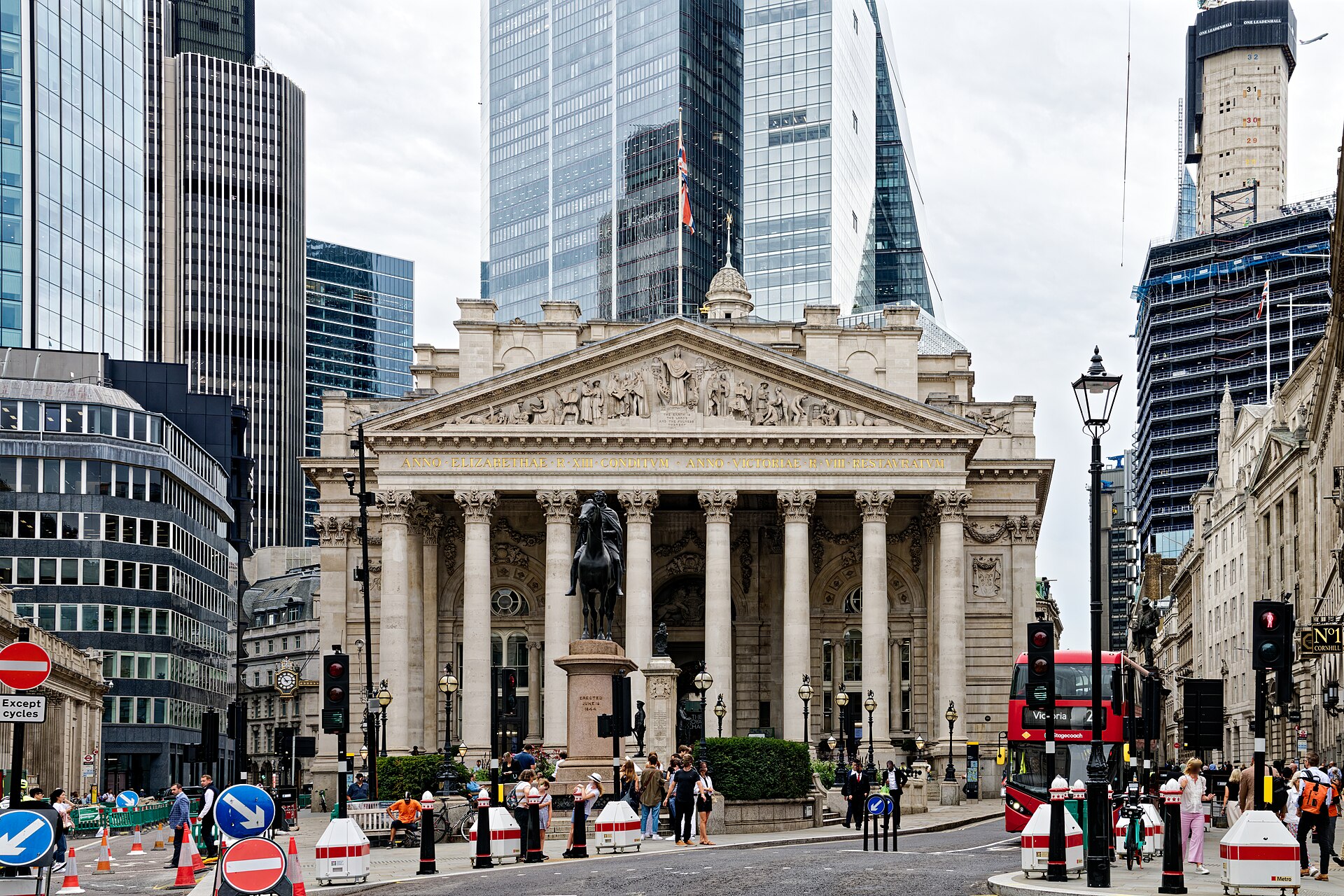
The Royal Exchange in London looking like a Roman temple.
The cultural vogue of antiquity started to shift somewhat with the rise of nationalism in the nineteenth century. Different nations started discovering their own particular histories of the Middle Ages, romanticising them and using them to assert nationhood. We have written about how Swedes rediscovered the Vikings, and similarly Germans found the old Germanic tribes described by Tacitus, the English had their Anglo-Saxons, and the French their Gallic ancestors (notable amongst whom are Asterix and Obelix).
The problem with this renewed interest in the Middle Ages was that it resulted in highly problematic, politically-motivated caricatures of fierce and noble warriors with very little nuance. They were (and still are) used by some as a way to imagine insular worlds of racial purity that never existed. And so, these nationalists have done little to dispel popular misunderstandings about the Middle Ages, Antiquity, and Modernity.
What’s the point in periodisations?
Quite a few of the issues raised here stem from the labels that we give to different periods in history. If something is said to be a modern (or medieval) phenomenon we may have a certain image of it in our minds even before we heard any of the details (indeed, ‘medieval’ is sometimes used to describe something primitive or barbarous). In other words, these labels breed prejudice and biases.
So why do we keep them? Mainly because, imperfect as they are, they remain useful. Human history is very long, and it helps to have a shorthand that historians can use with their colleagues and the public to position themselves on a timeline.
Some have suggested more thoughtful ways to slice up European history into manageable but more nuanced chunks (n.b. that in other parts of the world other labels are used). So now we have the Late-Antique period covering the centuries of transition from the Roman world to the Middle Ages. The Middle Ages themselves are often divided today to Early, High, and Late medieval (none of which is ever ‘dark’). The ‘Renaissance’ was ditched by some in favour of ‘Early Modern’ which carries less ideological baggage. And then there is the Late Modern period and even contemporary history, that is, the latest events we have sufficient historical perspective to examine. Anything later is journalism.
Does this solve the problem, though? Many would say, hardly. Historical periods are still artificial and problematic and the lines between them are uncomfortably fuzzy. They shift and change according to fashion and are often ideologically charged. But since we can’t seem to find a better solution, we’ll probably have to keep these labels for now.
Sources
Alessandra Petrina, ‘All Petrarch’s Fault: The Idea of a Renaissance’, Memoria di Shakespeare. A Journal of Shakespearean Studies (2019), pp. 145-164.
Matteo Burioni, ‘Vasari’s Rinascita: History, Anthropology or Art Criticism?’ in Alexander Lee, Pit Péporté and Harry Schnitker (eds.), Renaissance? Perceptions of Continuity and Discontinuity in Europe, c.1300- c.1550 (2010), pp. 115-127.