
He who controls the past controls the future, and he who controls the present controls the past, if George Orwell is to be believed. One way to control the past is through the selective presentation of information, or even through disinformation. Disinformation is the spread of false or misleading information for the purpose of some kind of gain, such as deceiving or dividing an enemy. This is a powerful tool which is regularly used by states as a way of controlling public opinion (not to be confused with misinformation, where the spread of inaccuracies is accidental). Despite the word being new, evoking present-day images of troll farms or AI videos posted on Truth Social, powerful people controlling the spread of information about politics and current events is nothing new.
One example of this can be found in early modern Sweden, where there existed a state position known as the “Historiographer of the Realm”. While the title might sound like something out of Game of Thrones (or a job-seeking history graduates’ wildest dream), it was an official position that existed within the Swedish state from the early 17th century until 1834. Known as a rikshistoriograf (or historiographus regni, in Latin), the role of the historiographer of the realm was to outline the state-approved stance on historical events. This is an inherently political action, which involves (re)writing history in order to explain or improve public opinion of specific state actions, often for less than ingenuous motives.
What is a Historiographer of the Realm?
As the name suggests, the role involves outlining the official, state-approved version of historical events, both regarding the history of Sweden itself, as well as events which took place in wartime. Sweden was not the first or only country to introduce a position of this kind; Spain introduced the Cronistas mayores de Indias in 1571 under Philip II to document the expansion of the Spanish Empire. Denmark had the position “Historiographer Royal” (Kongelig historiograf; Historicus regius) in 1594; England introduced the equivalent in 1661 and Scotland in 1681. These roles have also existed in less official capacities: while he lacked the official job title, Leonardo Bruni, head of the Florentine administration in the early 15th century, is often considered the first modern state historian for writing his History of the Florentine People.
Outlining the state-approved stance was not simply a case of describing historical events in which Sweden was involved.. It was an inherently politicised act. For example, when Christina of Sweden converted to Catholicism in 1654, before abdicating and leaving for Rome, her conversion was completely absent from the records. Instead, the state accounts stressed how her being a woman made it hard for her to ensure support and emphasised her unwillingness to marry, putting the succession at risk. That means that in the state account, rather than prioritising her personal faith over the interests of the nation, she selflessly put Sweden first by protecting it from the limitations of her gender. She declared her cousin Charles X Gustav (whose marriage proposal Christina had declined) as her successor. He was appointed despite objections from the privy council, and given their connection, likely wanted to protect her reputation.
To do their job, the historiographer of the realm was granted access to the Swedish state archives, something which most people did not have. As this information was tightly controlled, the historiographer’s work was scrutinised closely to ensure that no state secrets were revealed and that nothing unfavourable about Sweden and its allies was published. This could mean lengthy back and forth with the censuring authority, something which historiographer Samuel von Pufendorf (who we will get to shortly) described as an immense source of frustration.
Who could become a Historiographer of the Realm?
Given the importance of the role, it wasn’t open to just anyone. In the seventeenth century, it was often held by foreign scholars as an attempt to shape Sweden’s reputation as an intellectually significant nation. Even at its imperial height, Sweden was often perceived as a peripheral and unpleasant place to live in. The ability to attract well-regarded foreign scholars to work in its service was therefore seen as a mark of prestige, portraying Sweden as a country of choice for successful intellectuals.
The first iteration of this post (then called historicus regni) was held by Dutch renaissance scholar Daniel Heinsius, who was appointed by King Gustavus Adolphus in 1618. However, there is no evidence that he ever produced any work during his 37 years in Sweden’s service.
The lineup of historiographers in the following century is quite varied: we have Arnold Johan Messanius, born in Gdansk (then a Swedish territory, now in Poland) and charged with spying for Poland as a teenager. After spending time in Kexholm (at the time part of Swedish Finland, presently a territory of Russia), he was pardoned in 1640 and was instructed to author an official history of Charles IX in 1641, but was executed after his alleged involvement in his son's attempt to incite a coup against Christina of Sweden ten years later.
Another notable historiographer of the realm was the German historian and jurist Johannes Locceniu. He was given the job in 1651 (the same year Messanius was executed) and published extensively. His work initially emphasised the period following Sweden’s Christianisation. This was perceived as going against the status quo at the time, since much of Sweden’s positive reputation was connected to its ability to trace its ancestors to the pre-Christian Geats and the Goths. Later versions of his works incorporated these older narratives, and took on fantastical elements, likely due to pressure from the crown.
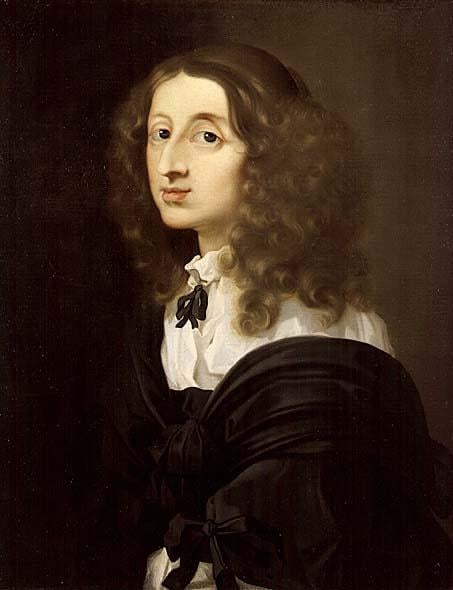
Queen Christina of Sweden
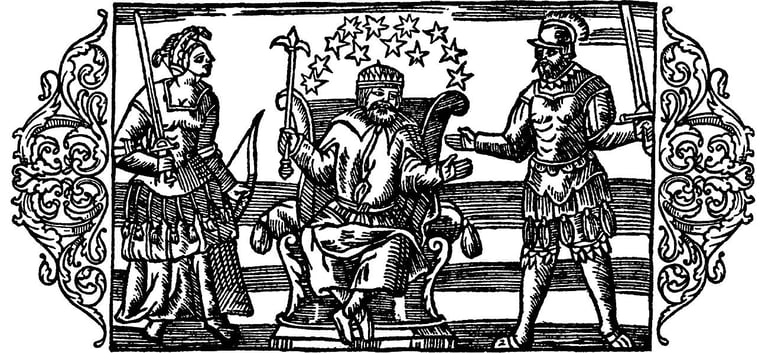
The Geats, who the Swedes considered to be their ancestors.
Perhaps the most internationally renowned scholar to work in this position was Samuel von Pufendorf, a key figure in the European Enlightenment. Pufendorf published multiple works in this role. These were primarily written in Latin, intended to sell the Swedish perspective to an international elite audience. In line with the later Loccenius works, he promoted Sweden as ‘the most ancient Kingdom in the world’, and one that was ‘immediately governed by Kings’. Thus establishing that his employers’ ancestors played an essential role in making Sweden a great warrior nation. However, he also grounded his analysis in factual events. After he left Sweden to serve as the historiographer of Prussia (much to the Swedish Crown’s chagrin), his writings were reworked and translated into Swedish, and Rudbeckian elements, such as the idea that the biblical floods occurred in northern Sweden, were woven in throughout the narrative. Even after he left Sweden and with extensive revisions to his work, his name was still being used to give credibility to the Swedish case.
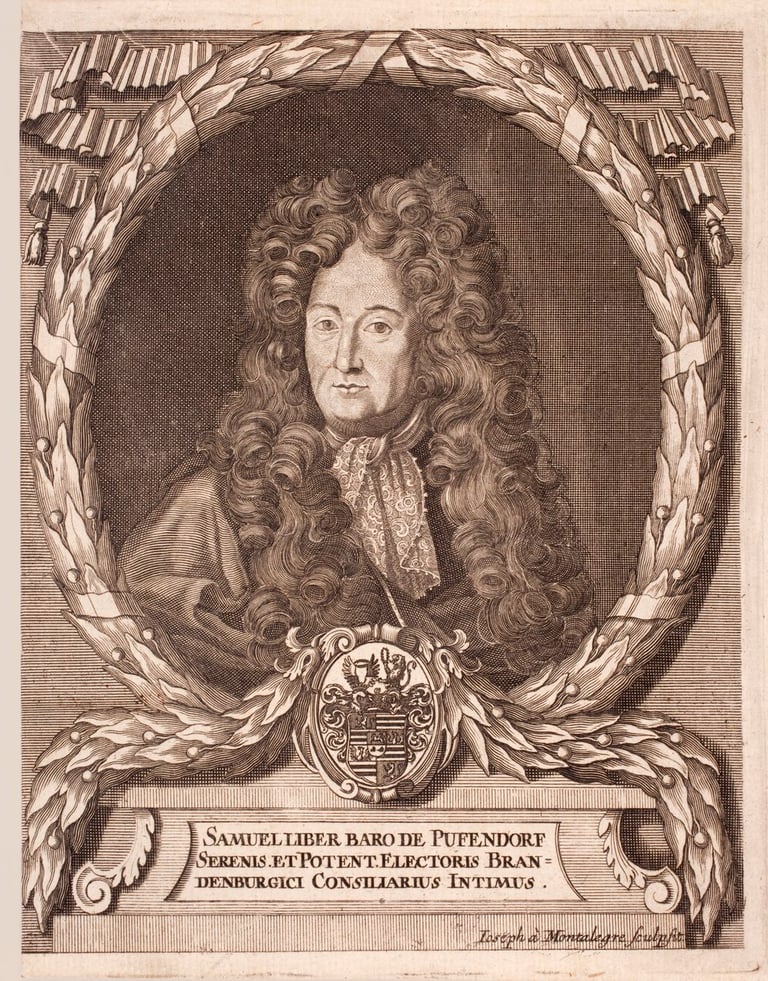
Samuel von Pufendorf